Showing posts with label computer. Show all posts

Tuesday, April 30, 2013

Snowflake Computers


The next generation of computers will be a little larger than a snowflake.

Such tiny computers (or "smart dust") will have "tiny CPUs that run programs on a skeleton operating system and be able to access equally small banks of RAM and flash memory." Smart dust will forage subsist off power from its surroundings - e.g. smart dust near light will have a solar panel, while smart dust in high temperatures will convert heat into electricity.

Smart dust will primarily be used to monitor every movement of big structures like bridges or skyscrapers, or report on the environment inside a home - or even our bodies. It might be possible to run an internet search like "Where is my remote?"

Monday, May 16, 2011

Planck's Law Breaks Down


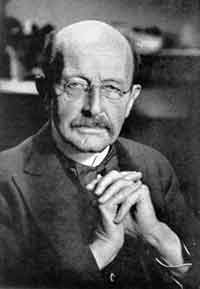
In 1900 Max Planck described how energy dissipates from any nonreflective object. But Planck said if something else is really, really close to the object, the law might break down. Research reveals that heat transfer rules from a nonreflective object (Planck's blackbody radiation law) break down if the object is brought close enough to another object, but not touching.

Researchers placed flat plates a 10 billionths of a meter apart and radiation flow was 1,000 times greater than Planck’s law predicts. The findings have implications for computer storage and solar energy devices which become less efficient because of heat buildup.

Friday, January 14, 2011

Internet Makes Elderly Smart


Neuroscientists scanned brains of 24 55-74 year-old volunteers as they read and searched on the internet. Both activities sent blood rushing to brain areas controlling memory and language. However, when using the Internet, brain regions dealing with complex reasoning also became activated and those with more more Internet experience got twice the brain benefit of inexperienced users.