Showing posts with label psychology. Show all posts

Tuesday, September 24, 2013

Price Confusion


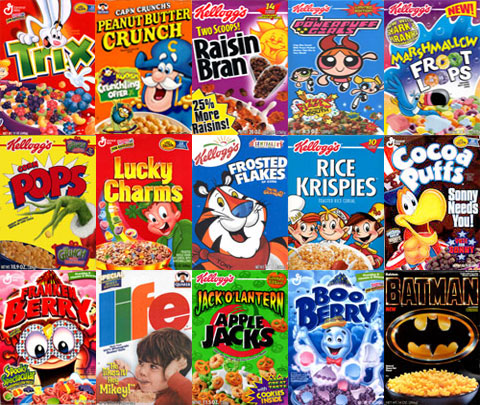
Research finds that customers have, ironically, a harder time choosing between similar products (e.g. cereal) if the products are priced the same.When prices were different, products were seen as similar, making it easier to select one product. But identical prices made the products seem less similar.

Wednesday, July 24, 2013

Pronouns and Individualism


Researchers hypothesized that pronoun usage reflects increasing individualism in American culture. Their research found that for American books from 1960-2008, use of, "first person plural pronouns (e.g., we, us) decreased 10% first person singular pronouns (I, me) increased 42%, and second person pronouns (you, your) quadrupled."

Happiness: USA v. Other Countries


Researchers analyzed happiness' definitions in dictionaries from 30 nations and in Webster’s dictionaries from 1850 to today. Researchers also coded the State of the Union address from 1790 to 2010 and investigated the usage of happy nation vs. happy person (1800-2008). 

"Across cultures and time, happiness was most frequently defined as good luck and favorable external conditions. However, in American English, this definition was replaced by definitions focused on favorable internal feeling states."

Thursday, July 18, 2013

Got Beef? Better Make Sure It Ain't Mutual


Research finds that 3rd parties most likely intervene in fights when drunk men are mutually aggressive, and were more than twice as likely to intervene in a non-aggressive manner. The most frequent aggressive incident (male pursuing a female), or 1-sided aggression between men, triggered few interventions.

Researchers think mutual aggression triggers the most intervention because other research shows that bystanders intervene more when the situation seems more dangerous. But its also possible that avoiding embarrassment compels.


Weak Arguments for Weak Minds


Research argues that providing someone with weak arguments for a cause they believe in is more powerful than providing strong arguments.

Research found that people were more likely to persuade others to vote for their cause if provided with weak arguments because it fooled them into thinking they could also contribute. Weak arguments were found to inspire people if their self-belief was relatively low. Weak arguments against one's position also increased participation. So, to increase participation, advocacy groups may want to show their supporters weak arguments for and against their position!

Tuesday, June 18, 2013

To Increase Willpower, Give in


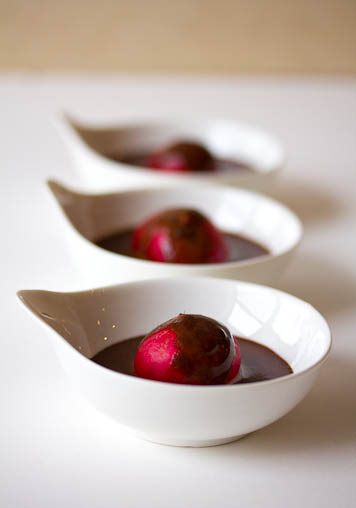
In a famous study, participants smelled and were shown cookies but some were asked to eat radishes. Afterwards, the participants were asked to solve a puzzle. Radish eaters made far less attempts and took less than half the time to solve the puzzle vs. the chocolate-eating counterparts. In other words, those who exercised will power depleted it.

So if you want to increase will power, give in every once in a while.

Monday, March 11, 2013

Lonely? Update Your Facebook Status


Participants posted more Facebook status updates than normal for 1 week and, unlike the control group, they
  1. Lowered feelings of loneliness
  2. Said the lowering was due to feeling more connected daily to friends, and
  3. Said the effect was independent of friends feedback

Monday, February 18, 2013

Cute Aggression


Researchers found that people looking at a slideshow of cute animals popped more bubbles on bubble wrap vs. people watching funny/neutral pictures (120 bubbles for cute pictures, 100 for neutral pictures, 80 for funny pictures). Cuteness, in other words, cultivated aggression in people - not tenderness. Researchers don't yet understand why the nexus exists, but surmise it exhibits a loss of self-control.

Wednesday, January 30, 2013

Stressed? Smile!


Researchers used chopsticks to manipulate participants faces into holding a neutral expression, a regular smile, or a Duchenne smile (smiles expressed through the mouth and eyes). In addition to the chopstick manipulation, some were told to smile. While holding the smiles (or not), they did various stress-inducing, multitasking activities.

Participants who voluntarily (in addition to, or only because of, the chopsticks) smiled better recovered from stressful activities than those with neutral expressions. Duchenne smile participants were the most relaxed.

Friday, December 14, 2012

Bored? Pay Attention


Research suggests that boredom is due to attention conflict. Boredom, according to John Eastwood is, “desiring of satisfying engagement but not being able to achieve that." Attention is the interaction between our senses and our environment. Eastwood argues, therefore, that attention is at the core of boredom. When a task requires little attention, the stimulus is insufficient - we aren't spending enough effort on the task, and nothing else compensates. Similarly, if there are too many stimulus', we cannot focus either.

A previous study had people read an interesting article while a TV played. If the TV was loud, people felt frustrated— not bored. If the TV was low, more people felt bored. While in both cases attention was disrupted, the cause of the disruption was unclear when the TV was low - so boredom ensued because no apparent reason for the lack of attention existed.

Another previous study examined reactions to background conversations while people engaged in 1) a task requiring little attention, 2) an uninteresting task requiring attention, and 3) an interesting task requiring attention. With task 1, an interesting background conversation decreased boredom. With task 3, people ignored the conversation. With task 2, however, boredom rose: a boring task requiring attention while competing with background conversations stunted attention.

If the conclusion is true, boredom can be fixed.
Pricing Emotions


British & Hong Kong students chose how much they'd spend (£10 - £150), for 1 hour, to enjoy positive emotions or avoid negative emotions.

British students paid more for positive emotions: love was most valued (£95), then happiness, then avoiding sadness ... disgust was the least valued emotion to avoid (£43). Hong Kong students valued experiencing positive emotions = to avoiding negative. Head-to-head, Brits paid more for "happiness, delight and calm"; Hong Kong students paid more to "avoid regret, embarrassment and frustration."

Researchers noted, "By putting price-tags on emotions we might come closer to understanding the value of human experience in order to aid policies at enhancing well-being."

Saturday, November 3, 2012

Depression Causes Bullying


Research shows that depression in fourth graders forecasts bullying and exclusion in 5th and 6th grade, respectively. The study tempers prevailing views that bullying caused depression.

Sunday, September 16, 2012

For the Kids Sake, Argue with Them


Research finds that youth who were comfortable expressing their opinions at home were better at rejecting peer pressure ... especially teens who used reason to persuade their mothers instead of insults or whining.

Perhaps the independence cultivated at home carries over to school. Those comfortable in relying on their mothers when stressed are less likely to feel dependent on - and less influenced by - friends.

Thursday, September 13, 2012

Sunday, August 19, 2012

Sweet Tooth = Sweet Nature


Research finds that people who liked sweet tastes more than savory tastes tended to be kinder. College students answered a survey about their character and also ranked food preferences. Students with a sweet tooth were more likely to volunteer.

Thursday, July 19, 2012

Super Size = Status


In a study, participants judged another consumer on several attributes, including status, after the consumer selected the largest options available for products that were free or of similar price. Those selecting the biggest product were deemed those with highest status - i.e. socially insecure consumers will purchase bigger items to gain status.

Wednesday, June 20, 2012

Don't Gamble with Friends


MRI scans revealed higher activity in the brain's striatum, linked to rewards, when a gambler beat a friend in the lottery vs. when the gambler won alone (the medial prefrontal cortex, linked to social reasoning, showed similar patterns). Victorious group gamblers were also more likely to behave riskier in subsequent lottery trials. In other words, our brain values winning amongst others more than winning alone.

Researchers see an evolutionary correlation as strong incentives exist for high social rank, as dominant animals gain privileged access to limited resources and being alone induces risk-aversion because one bad gamble can be fatal especially without a social network.

Religion: Instinct vs. Reflection


Research sought to find out if trusting instinct over reflection affects the strength of religious conviction. Those relying on instinct to answer various questions were 1.5 times as likely to say they were convinced of God's existence vs. those relying on their analytical skills. Instinctual thinkers were also more likely to become more confident believers over their lifetimes, regardless of their upbringing vs. reflective thinkers becoming less certain.

Students and Incentives


Student performance in low-performing schools was tested against promises of financial and non-financial incentives for good grades. The results:
  1. Size matters: Students were willing to work much harder at $80/hour, but not at $40/hour
  2. Punishment > Reward: Rewards were most powerful if framed as losses, demonstrating our stronger attachment to what we possess
  3. Non-financial incentives (e.g. trophies) worked best with youth
  4. Immediacy is everything: Promises of future rewards was largely ineffective

Drooling Over Everything


Research finds that men salivate when seeing material objects when feeling powerless or if looking for mates. In other words, all types of desires may activate the same neurological reward systems.

In one trial, participants were tricked into feeling powerful or powerless, their drooling in response to money then tested. In another, photos of high-end sports cars replaced money and showed images of attractive potential dates who are drawn to luxury goods. The control group was told to imagine going to the barber shop.Money caused more salivation during a low-power state. Men in the car trial drooled more than those told to think of getting a haircut when shown images of sports cars.