Showing posts with label cognition. Show all posts

Saturday, December 8, 2012

Mild Dehydration = Biran Dmub


25 young, healthy, exercising women drank water the night before they walked on a treadmill. They also took various cognitive tests. Compared with dehydrated test subjects, the hydrated group did not suffer from headaches, fatigue, or difficulty in concentrating. Another study with men had similar results.

The study concludes that mild dehydration can affect mood, energy, and thinking ability. So, um, drink water.

Saturday, November 3, 2012

The Scent That Makes You Smarter


A study shows that smelling rosemary can improve cognition.

20 participants were exposed to varying amounts of rosemary while doing subtraction and visual processing tasks. Rosemary oil didn't increase attentiveness, but those exposed to more rosemary did their tasks faster and better. The key component - 1,8-cineole - is also found in eucalyptus and sage essential oils.

Thursday, October 11, 2012

Forget Corruption, Power Improves!


Research finds that power can improve focus and analytical thinking.

Individuals were asked to remember times when they influenced or adjusted to others. A word association task was then performed to test analytical or holistic thinking. Those whose memories involved exercising power showed more in-depth, taxonomic thinking vs. the dominated who thought more generally.

Monday, August 27, 2012

The Spacing Effect

The "spacing effect" is a simple technique to better retain information - and perform better on exams.
  1. Learn the subject
  2. Take a good chunk of time (e.g. couple days) to do other activities
  3. Come back and attempt to retain the subject
While retaining is difficult because of the gap, it is precisely because of the difficulty long term memory improves. Note: If the interval between learning and retaining is too short or too long, there is no spacing effect.

As an example, an experiment found that an Ontario school 5th grade students remembered far more vocabulary words they learned in 2 sessions spaced 1 week apart vs. 1 lesson.

Sunday, July 22, 2012

Eat Fish = Brain Happy


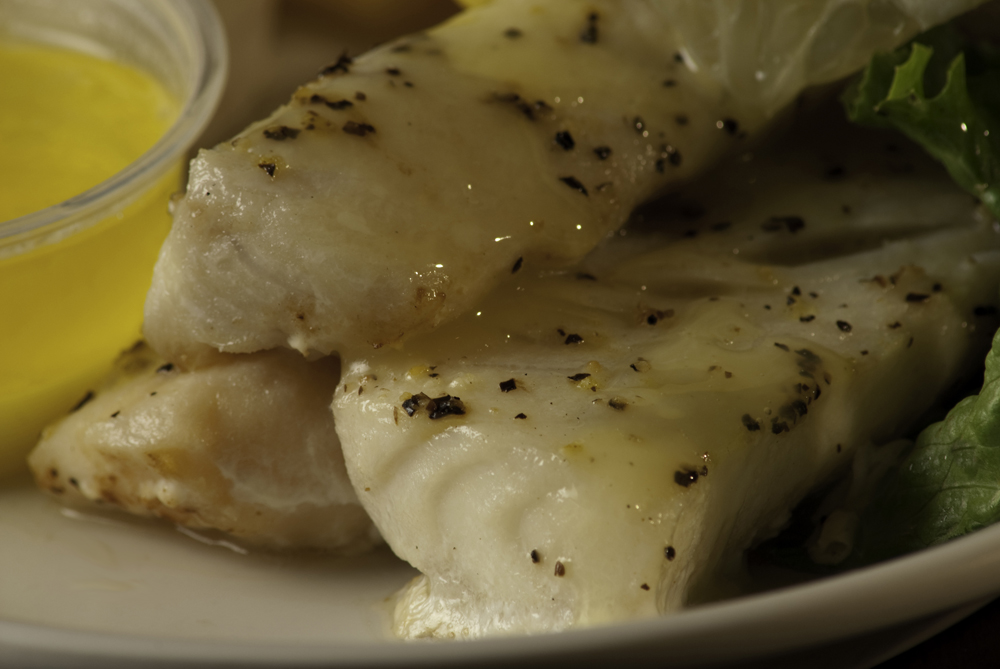
Research finds that people who eat baked or broiled - but not fried - fish at least once a week preserved more grey matter in brain areas at risk for Alzheimer's disease and also exhibited higher levels of working memory capacity.

Wednesday, June 20, 2012

Religion: Instinct vs. Reflection


Research sought to find out if trusting instinct over reflection affects the strength of religious conviction. Those relying on instinct to answer various questions were 1.5 times as likely to say they were convinced of God's existence vs. those relying on their analytical skills. Instinctual thinkers were also more likely to become more confident believers over their lifetimes, regardless of their upbringing vs. reflective thinkers becoming less certain.

Students and Incentives


Student performance in low-performing schools was tested against promises of financial and non-financial incentives for good grades. The results:
  1. Size matters: Students were willing to work much harder at $80/hour, but not at $40/hour
  2. Punishment > Reward: Rewards were most powerful if framed as losses, demonstrating our stronger attachment to what we possess
  3. Non-financial incentives (e.g. trophies) worked best with youth
  4. Immediacy is everything: Promises of future rewards was largely ineffective

Tuesday, June 12, 2012


Research finds that infants can be trained to improve their concentration skills.

For 15 days, 11-month-old infants were trained to focus on images on a computer screen. In one lab, a butterfly appeared as long as the infant focused on the butterfly and ignored distractions. An infant control group watched TV. Infants cognitive abilities were tested with toys at the beginning and end of the trial. Trained infants could focus for longer periods, better shift their attention from one point to another, and spot more patterns and smaller changes while playing with toys.


Tuesday, December 20, 2011

Thinking More = Eating Less


Research finds that the more of a food item you actually imagine eating, the less you will actually eat it. Group 1 imagined eating 33 M&Ms. Group 2 imagined putting 33 quarters into a clothes dryer. Then they gave each group a bowl of M&Ms. Not surprisingly, Group 1 ate fewer M&Ms.

Thursday, April 7, 2011

Shoe Thrower Helps Neuroscience


When President Bush ducked shoes thrown at him, Prime Minister Maliki, standing right beside, barely flinched. This confirmed a theory that we have a dual vision system - human brains "see" things far before the eyes.

President Bush ducked because his brain’s action pathway labeled the trajectory of the shoe as a threat well before his perception pathway began to track its flight. Maliki's brain, however, realized the shoe wasn’t headed his way - so he didn't duck.

The findings have implications for sports, among other things.

Wednesday, December 8, 2010

Tetris Good For Brain


Prolonged Tetris exposure can lead to more efficient brain activity as energy consumption decreases (measured by glucose consumption) - meaning the brain is operating more efficiently. 1/2 hr/day for 3 months can increase "critical thinking, reasoning, language and processing" and increase cerebral cortex thickness.

Tuesday, August 17, 2010

Raven Defies Natural Selection


National Geographic presents an experiment in which a raven is put on a branch while its food is hung from a string. Researchers wanted to see if the raven could think through the process and pull the string up to itself to obtain the food.

It did.

The problem is that:

1) The behavior was not learned as the researchers did not teach the raven the skill
2) Natural Selection does not provide the answer as the scenario would not have occurred in the wild
3) Chance could not provide the answer because there were too many individual steps

Thus, the ability to actively think through solving this problem must be an innate quality. But for a bird without a cerebral cortex - instrumental in creative thought - to perform such a function is nothing short of magical.

Aesop's Fable - A Reality


Aesop tells the story of a thirsty crow who comes upon a pitcher with water that is beyond its reach. The crow uses pebbles to raise the water level and gets his drink. It was just a fable ... until last year.

Current Biology reports that 4 captive rooks (similar to a crow) were forced to decide how to raise the water level so that a floating worm was reachable. All 4 rooks solved the problem with precisely the number of stones needed. 3 rapidly learned to use large stones over small ones and understood that sawdust cannot be manipulated in the same manner as water.

The discovery is mind-blowing. It furthers the notion that tool usage is a flexible ability in animals, and holds implications for the evolution of tool use and animal cognition. It also demonstrates certain animals' ability to solve complex physical problems via causal and analogical reasoning. For the rook to do this without a cerebral cortex - instrumental for creative thought - leaves one in awe.

See video #1 & #2 of the study