Showing posts with label nature. Show all posts

Wednesday, January 11, 2012

30 Hornets vs. 30,000 Bees


See who wins.

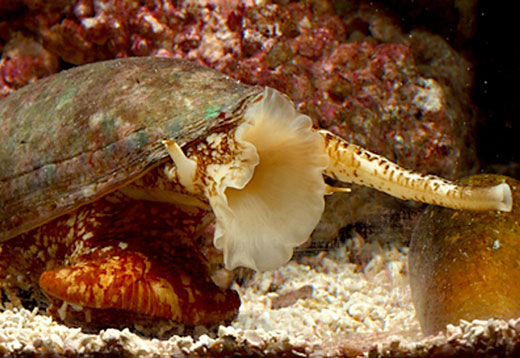
Deadly Snail


Watch how a cone snail with 100+ toxins hunts.

Tuesday, December 20, 2011

Coldest Glaciers Help Mountains Grow


Dubbed "glacial armoring," researchers discovered that the coldest glaciers protect mountains, allowing them to grow taller (*note: glaciers normally cause the erosion of mountains). Studying the Andes mountains, they found that the northern and warmer area eroded much faster in comparison with the southern and colder area. This is because colder glaciers don’t move much, thereby sealing the mountains and preventing erosion.

Friday, November 11, 2011

Hyena's Laugh When They're Serious


Research finds that hyenas laughter is used to send status cues to the group. Research also found that each hyena's laugh's voice establish a hyena's identity and age. Moreover, the dominant hyena's have a monotone laugh while subordinate hyenas are more erratic.

Too bad the calls didn't work with this lion.

Wednesday, October 5, 2011

Bees Can Recognize Human Faces


Research finds that bees can be trained to recognize human faces

Researchers drew simple faces and bees were trained to distinguish between narrower and wider facial features. Then bees won sugary rewards if they distinguished face-like features from non-face images. Then they were trained to select real faces from images in which those same features were scrambled - e.g. selecting between a face and something that had all the features of a face but in a disorganized fashion.

Wednesday, September 7, 2011

Plants Created River Bends


Research shows that ancient rivers were broad straight sheets of water, but plant colonization changed water flow.

The first vascular plants took root because of the abundant water and began to hold sediment in place - creating riverbanks, thinning waterways. Paleozoic-era plants bunched together at the water’s edge and colonized the Earth. Over the next 50 million years this led to today's curving rivers and all the green we see around.

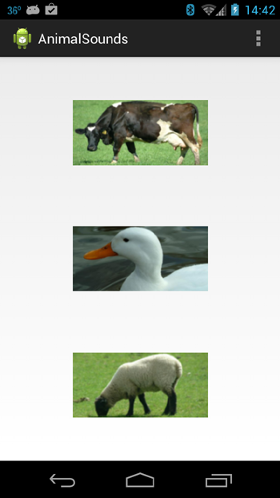
All Animals Sound the Same


Researchers
compared the calls of 500 different animals - insects, mammals, reptiles, fish - you name it. They found that the basic features of every animal’s cry (e.g. frequency, duration) depend on the animal’s metabolism, which depends on the animal’s size and body temperature.

When the calls account for body size and temperature, a whale sounds a lot like a frog and vice versa. Researchers think a metabolic link exists, because energy use affects the nerves and muscles animals use to make noise.

Monday, August 8, 2011

Plants Kind to Relatives


Research shows that plants know if they're next to a relative and will grow to allow the relative more access to light.

Previous research showed that plants can recognize relative's root systems from the same mother plant and will give them a fairer share of nutrients. The new study found when impatiens plants shared a pot with seeds from the same parent plant, they grew taller with more branches and fewer leaves. When planted with other non-sibling impatiens, they grew more and larger leaves that crowded out non-relatives. Roots alert plants to the relationship of nearby plants because when impatiens were planted near siblings but in separate pots, they didn’t recognize their relatives.

Thursday, June 9, 2011

Prehistoric Shark Alive


Researchers discovered a prehistoric frill shark - a species whose fossils have been found to be at least 80 million years old.

See the video.

Wednesday, June 8, 2011

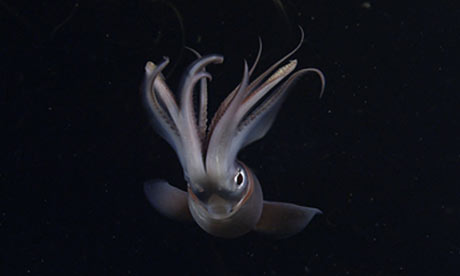
Giant Squid Video


See rare clip of a giant squid.

Saturday, June 4, 2011

Cobra Killer


Video of fight between Indian mongoose and Indian cobra.

Monday, May 30, 2011

Electric Maple Trees


Research reveals that maple trees generate a small amount of electricity. Potato's can also transmit electricity but such experiments use electrodes of two different metals to set up a charge difference thereby allowing electricity to flow. In the maple tree study, electrodes of the same material generated a steady voltage of a few hundred millivolts (far less than 1.5 volt AA battery).

Pigeons Whistle for Safety


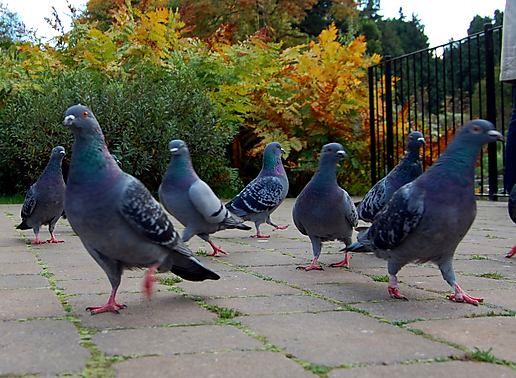
Research reveals that pigeon wing-flapping creates distinct whistles, warning flock-mates when taking off or when escaping predators. Scientists recorded the sounds crested pigeons wings made during a routine liftoff and during an emergency takeoff. The sound produced during dangerous moments includes a distinctive whistle. That noise scatters a flock of pigeons as quick as the shadow of a predator.

Monday, May 16, 2011

Walking in Circles


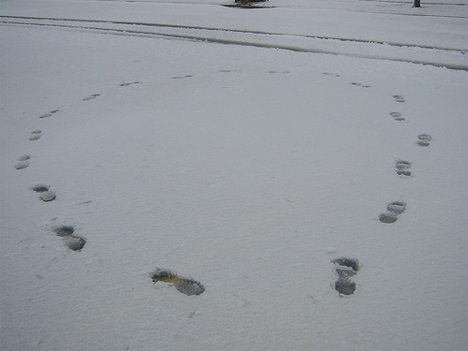
Yes, people, in a featureless environment, will walk in circles. Research found that in the absence of visible landmarks or cues from the sun, people who are lost can’t walk a straight line.

Participants plopped in a forest were asked to walk in a straight line. When cloudy, wanderers walked in circles, but veered randomly left and right, repeatedly crossing their own paths. On sunny days, they maintained an almost straight course. The same happened with volunteers in the Sahara Desert during day and night.

Saturday, April 30, 2011

A Tiger's Strike vs. Kung Fu Tiger Style


Which generates more power - a tiger strike or a Kung Fu tiger style strike?

See for yourself.

Sunday, April 17, 2011

Toucan's Beak


The toucan's bill, 1/3rd its body, has been theorized to attracted mates, peel fruits or for territorial defense. A new report says the beak acts like a radiator since birds don’t sweat. When a toucan needs to cool, its beak heats up. The beak's surface area allows heat to quickly dissipate; for example, when a toucan lowers its body temperature in preparation for sleep, it cools 10°C in minutes. When outside temperatures rose, the bill heated up, but the bird’s core body temperature did not.

Orangutan Locomotion


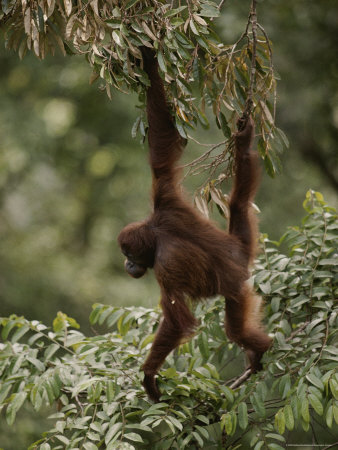
A study shows the secrets to how heavy orangutans (up to 180 lbs) travel through the trees to get fruit without breaking branches.

Orangutans sometimes move upright, sometimes horizontally with their limbs fully extended. They avoid repetitive motions, which could make their perches sway more. And they usually grab on to 1+ branch at a time — 1/3rd of time they’re holding more than four at once. Also, climbing higher requires energy and, if the tree is shaking, orangutans must wait for the vibrations. By swaying instead of leaping from branch to branch, orangutans use less energy, and less energy and time if they climbed down and back up trees. Also, adult females swing conservatively while males and youngsters are risk takers.

Chimpanzees, by comparison, pull their bodies close to the tree branch while moving because they are relatively small and don't worry about the vibrations their body weight would create.

Thursday, December 30, 2010

Bees Act Like Serial Killers


Bumblebees foraging for food avoid stopping at flowers too close to home, perhaps to avoid attracting predators. Known as geographic profiling, this science has allowed scientists to locate the entrance to a hive by mapping which flowers the bees visit.

It is now being used to predict where serial killers might live based on where they commit crimes. Murderers operate fairly close to home, but maintain a kill-free “buffer zone.”

Alcoholic Animals


In the Malaysian rain forest, scientists noticed a yeasty smell from a local palm and a frothy substance resembling the head of beer. The palm’s nectar has as much alcohol as some beer.

The pen tailed treeshrew and slow loris were found to repeatedly drink the nectar every night - equivalent of ~9 drinks, but they don't act "drunk." Also, they act as the plant’s pollinator.

Sunday, December 19, 2010

Colors Nutritional For Trees


Research shows that fall's bright red leaves deliver more nutrients to trees than if they were not so colored.

Trees in nutrient-poor soil produced more red pigment, backing a 2003 discovery that blocking red pigment production makes leaves ultra-sensitive to sunlight, causing less nutrients to be delivered to the plant.

This means that when the soil is poor, making the red pigment keeps those leaves working longer.