Showing posts with label linguistics. Show all posts

Monday, November 11, 2013

Geography & Voice


Each individual language has a few number of sound units (phonemes) and research suggests geography may affect which phoneme's usage become commonplace.

The ejective consonant (e.g. "P" or "K") phoneme exists in ~20% of the languages. Of 500+ languages  studied, research shows that languages spoken at higher elevations were more likely to use ejective consonants. This may be because lower air pressure eases the burst of air characteristic of this phoneme.

Wednesday, July 24, 2013

Pronouns and Individualism


Researchers hypothesized that pronoun usage reflects increasing individualism in American culture. Their research found that for American books from 1960-2008, use of, "first person plural pronouns (e.g., we, us) decreased 10% first person singular pronouns (I, me) increased 42%, and second person pronouns (you, your) quadrupled."

Wikipedia vs. Encyclopedia Britannica


A study examined content-framing of encyclopedia entries of top Fortune companies in Wikipedia and Encyclopedia Britannica in 2006, 2008, and 2010. While  Britannica was predominantly neutral, "Wikipedia entries were significantly longer, were more positively and negatively framed, and focused more on corporate social responsibilities and legal and ethical issues ... The findings stress that the knowledge-generation processes in society appear to be fundamentally shifting because of the use of social media collaboration."

Tuesday, April 23, 2013

Turkish English


Science has published a study revealing that modern Indo-European languages - which includes English - originated in Turkey 9,000 years ago. This rejects the prevailing theory of the language family originating 5,000 years ago in SW Russia.

Researchers studied "virus epidemics to create family trees of ancient and modern Indo-European tongues to pinpoint where and when the language family first arose."

Linguists identify language families by looking for similar sounding (and, often, meaning) words in modern languages (e.g. water & wasser - German) - the closer the words, the closer the languages.

Friday, November 2, 2012

Baboons That Can Read


A video clip summarizing a study that demonstrates that baboons can read basic English words.

Thursday, April 19, 2012

Wednesday, November 23, 2011

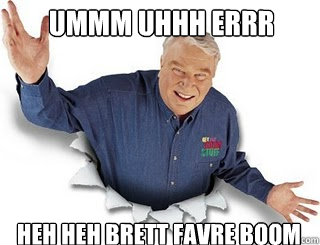
Ummmm


Why do we say words like "um"?

1) No reason: Father of modern day linguistics, Prof. Noam Chomsky believes such phrases are simply "errors in applying knowledge of language in actual performance."

2) For Control: One school, for example, believes the usage is deliberate - if anticipating a delay in speech, the speaker uses these signals to inform the listener we need a second to formulate our thoughts. Otherwise, the listener may feel the speaker is finished. They say "um" almost always sets up a long delay in speech, while "uh" signals a brief pause. Speakers also extend vowels of words if searching for the next word. They say such "disfluencies" make up 6-10% of spontaneous speech and all languages have these "disfluencies".

3) For Comprehension: Other research argues toddlers use disfluencies to focus on words that follow. As compared with a normal sentence, toddlers over 2 years of age tended to pay more attention when they heard a sentence with "um" or "uh". Researchers argue this is because 2 year olds understand that "uhs" often precede unknowns.

Monday, May 16, 2011

Obama vs. Osama


UPENN linguistics professor Mark Liberman explains that the common slip between "Obama" and "Osama" is due to the "syntactic category rule" (SCR) phenomenon and "priming."

SCR occurs when two words are confused for one another and occur when nouns replace nouns, verbs replace verbs, etc. If "Obama" were an adjective, not a noun, we probably wouldn't confuse "Obama" with the noun "Osama."

"Priming" (which seems to be an evolutionary adaptation) is when your brain makes certain words more accessible when they resemble (sound, meaning) words you frequently hear. So when we've read/heard/thought about hospitals, "doctor" and "nurse" will be recognized quicker and more likely to be used in a slip of the tongue.

Thursday, March 3, 2011

Werid But Cool


Aoccdrnig to a rscheearch at Cmabrigde Uinervtisy, it deosn't awlyas mttaer in waht oredr the ltteers in a wrod are, the olny iprmoetnt tihng is taht the frist and lsat ltteer be at the rghit pclae. The rset can be a toatl mses and you can sitll raed it wouthit porbelm. Tihs is bcuseae the huamn mnid deos not raed ervey lteter by istlef, but the wrod as a wlohe