Research reveals that new neurons in the hippocampus are time stamped - i.e. simultaneous events are permanently linked in our minds. New neurons develop daily in the hippocampus - a key area of the brain responsible for memory formation. These neurons are hyperactive early on to absorb all the events going on around them and temper off activity over time. This is, for example, why you probably know the sights and sounds of when you proposed to your spouse.
Wednesday, February 16, 2011
Time-Stamped Brain Cells
Research reveals that new neurons in the hippocampus are time stamped - i.e. simultaneous events are permanently linked in our minds. New neurons develop daily in the hippocampus - a key area of the brain responsible for memory formation. These neurons are hyperactive early on to absorb all the events going on around them and temper off activity over time. This is, for example, why you probably know the sights and sounds of when you proposed to your spouse.
Monday, February 7, 2011
Writing is Emotional
Research finds that writing marginalizes brain activity in regions associated with emotional responses ... meaning writing can help you calm down.
Brains of people were examined as they looked at pictures of others who had positive or negative facial expressions. When asked to label the emotion, the right ventrolateral prefrontal cortex became active, a region associated with self-restraint. Only when people express emotions in words does activity arise in this region. Also, the more that region is activated, the less active are a variety of limbic regions associated with emotions
Eat Less, Remember More
Research shows that low-calorie diets improved memory in elderly women.
In the study, 50 elderly women cut calorie consumption by 1/3rd. After three months, dieters were not only slimmer, but improved their memory. With better insulin levels and fewer markers of inflammation, the study suggests that keeping these factors under control may help keep the brain fit.
Seeing the Future
Research suggests that fMRI (functional magnetic resonance imaging) scans not only measures what the brain is doing, but what it is going to do.
FMRI studies assume brain blood flow correlates with neuronal activity. Active brain cells need nutrients, which freshly oxygenated blood supplies. Now, fMRI is also shown to detect increased blood flow in brain regions that aren’t currently active — but may be in the near future.
Tweezers of Light
MIT researchers use light beams to stabilize or pull molecules, thereby measuring the strength of protein chemical bonds. The science had previously been used to move cells on a microchip.
Money and Weight Loss
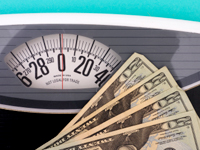
Research finds that people rewarded with a few $100 for losing a few pounds were much more successful in losing weight than those who just dieted.
In one study subjects earned money if they lost 16 pounds in 16 weeks. In the other, participants invested their own money, which they lost if they didn’t achieve the same goal. A control group dieted without any economic incentive.
53% of paid dieters, 47% of investor dieters and only 10.5% of regular dieters met their goal. Also, regular dieters averaged 4lbs loss vs. 14lbs for paid dieters.
Music & Language

Research suggests that music and language processing depend on some of the same brain systems.
One brain system, based in the temporal lobes, helps humans memorize information in language and music (e.g. words and meanings and familiar melodies). The other system, based in the frontal lobes, helps us unconsciously learn and employ the rules underlying language and music (e.g. syntax and harmony).
The study 1) confirms one set of brain structures underlies rules in language and music, 2) suggests that a different brain system underlies memorized information in both. Therefore, language and music both depend on 2 different brain systems for rules and arbitrary information.
Subscribe to:
Comments (Atom)