Monday, August 27, 2012

The Spacing Effect

The "spacing effect" is a simple technique to better retain information - and perform better on exams.
  1. Learn the subject
  2. Take a good chunk of time (e.g. couple days) to do other activities
  3. Come back and attempt to retain the subject
While retaining is difficult because of the gap, it is precisely because of the difficulty long term memory improves. Note: If the interval between learning and retaining is too short or too long, there is no spacing effect.

As an example, an experiment found that an Ontario school 5th grade students remembered far more vocabulary words they learned in 2 sessions spaced 1 week apart vs. 1 lesson.

Sunday, August 19, 2012

Sweet Tooth = Sweet Nature


Research finds that people who liked sweet tastes more than savory tastes tended to be kinder. College students answered a survey about their character and also ranked food preferences. Students with a sweet tooth were more likely to volunteer.

Chivalry Boosts Cricket Mating Chances


Research finds that upon seeing a threat, a male field cricket lets his mate enter their burrow first. While males fought with males, protection - not domination - helps foster long term relations with females.

Teaching Helps Writing


Research finds that science grad students who did research and taught improved their written research proposals over 1 academic year more than those who just researched. Differences in written quality "could not account for the results, because only specific skills among those analyzed showed improvement as a function of the teaching experience."

Teeth Help with Cooking History


Researchers infer that mankind discovered cooking ~1.9 million years ago - based on studies of our molar teeth.

Most large animals chew extensively so its easy to swallow. Cooking softens the food and dramatically reduces eating time to about 5% of the day (compared to ~48% if we didn't). Softer food due to cooking helped us evolve smaller molars and smaller jaws - a little less than 2 million years ago.

Exercise Increases Productivity


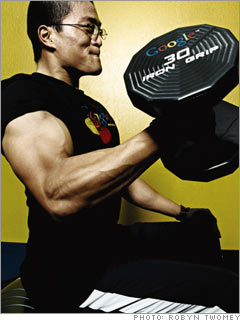
Research finds that employees who exercised during work were more productive than those who relaxed or worked during those hours.

Group 1 exercised 2.5 hours/week, Group 2 relaxed during those 2.5 hours while Group 3 worked through those 2.5 hours. Not only did productivity increase over 6 months and 1 year, but Group 1 employees also lost less time to sick days.

More Roads = Better Health


Research finds that after 5 years of construction, villages near a road in northern Ecuador had a larger rise in antibiotic resistance than more remote areas. Rise in resistance to ampicillin and sulphamethoxazole nearly double that in more remote areas. The road may ease resistant microbes to migrate from person to person.